By Dr. Karun Krishnan, Principal dentist · Published · Dental Implants
Feeling a wobble in a tooth you thought was fixed in place is unsettling. You don't need to work out which implant part is moving before you call the dentist.
A loose implant crown and a loose implant are different problems, but you can't identify the cause by feel alone. ANZAP explains that the implant supports a separate artificial tooth. At Timberlands, call (08) 9306 4040 and describe what changed so the team can advise on an assessment.
If you are having trouble breathing or think you are experiencing a medical emergency, call 000 or go to your local emergency department. This follows NSW Health's emergency advice for dental patients. Don't leave those concerns in an online booking message.
What is the difference between a crown and the implant underneath?
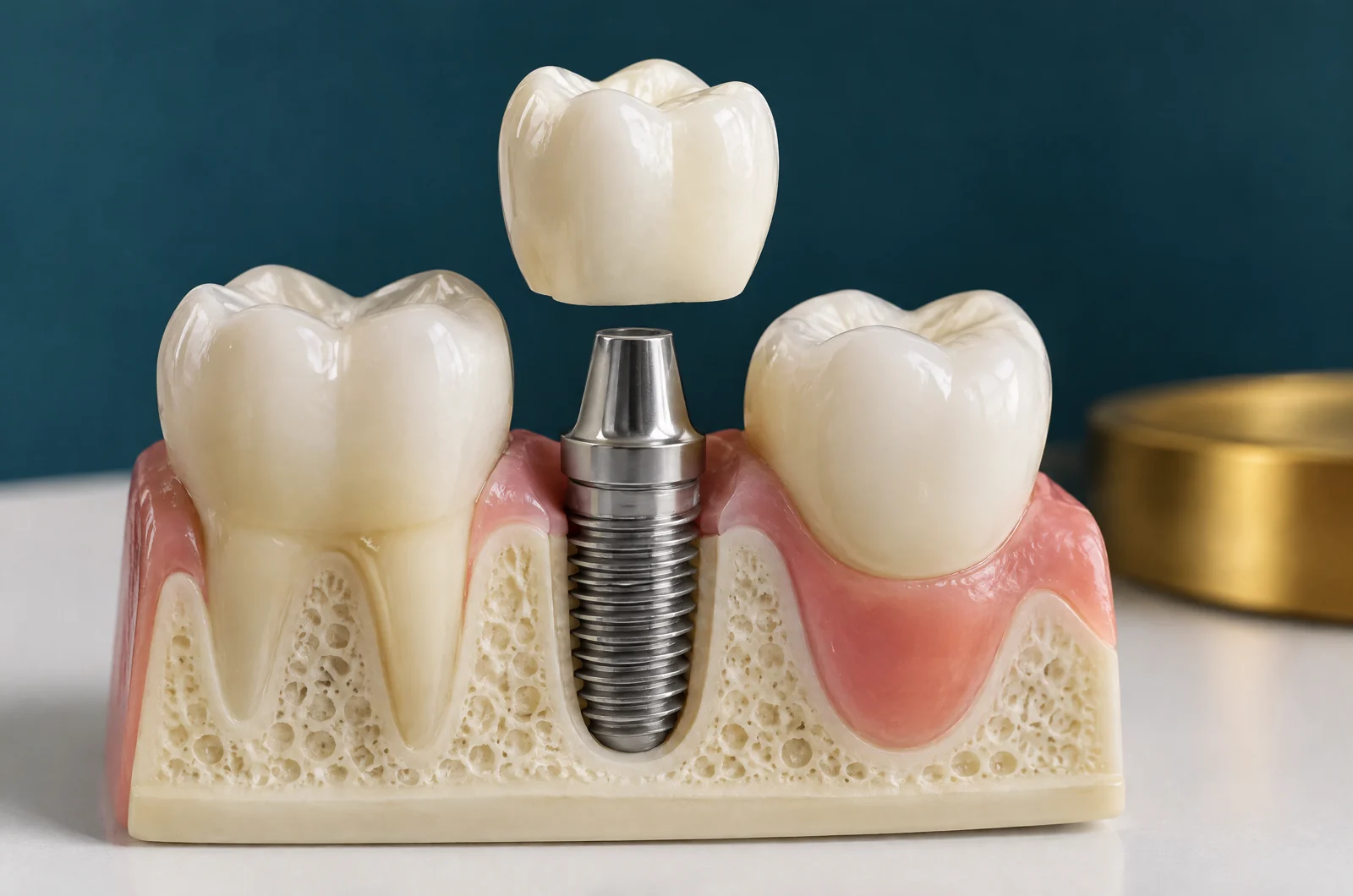
The crown is the artificial tooth you see; the implant is the metal part anchored in your jaw. A connector, called an abutment, joins the restoration to the implant. ANZAP's dental implant guide explains the implant and replacement tooth, while our implant consultation page describes the connector and crown.
When you say, "My implant is loose", you might mean that the visible tooth is moving. That description doesn't establish what is happening underneath. The dentist needs to assess the restoration as well as the tissues supporting the implant.
The Australian and New Zealand Academy of Periodontists (ANZAP) explains two different concerns. Its bite-problems guidance says excessive force can make the implant-supported tooth loose or cause pieces to break. Its implant guide also explains that an implant which does not fuse with the jawbone can become loose.
Those possibilities need different conversations. Neither tells you which applies to your mouth. Don't try to decide by repeatedly moving the tooth or attempting a repair. Contact the dental team for advice about the change you have noticed.
When does this need urgent help?
Contact a dentist promptly when an implant crown feels loose, rather than waiting for a routine review. Our existing-implant information advises calling for a loose crown, pain, swelling, bleeding or a feeling that something has shifted. You don't need to bring a diagnosis to that call.
Tell reception immediately if you also have facial swelling, fever, pus, pain when biting or a bad taste. Queensland Health's emergency dental guidance identifies infection symptoms that need dental attention. ANZAP's peri-implant disease guidance specifically includes swelling, bleeding and pus around implants.
Facial swelling needs immediate attention from a dentist or GP, according to Queensland Health. It also advises immediate medical attention if bleeding from a mouth injury cannot be controlled. If breathing is difficult or you think this is a medical emergency, follow NSW Health's advice to call 000 or go to an emergency department. Don't wait for the clinic to reopen in a medical emergency.
Timberlands offers emergency dental care during office hours. Call to explain your symptoms and ask what to do next; an online article can't confirm an appointment or a safe waiting time. For after-hours health advice, NSW Health also lists the nurse helpline 1800 022 222. This is an advice service, not a substitute for 000 in an emergency.
What if it moves but doesn't hurt?
Still report the movement. The absence of pain doesn't establish that the implant and its surrounding tissues are healthy.
ANZAP's peri-implant disease information explains that people can have inflammation and supporting-bone loss without pain. It also notes that even advanced peri-implantitis may not make the implant feel loose. These are separate points: a wobble needs assessment, and an implant that feels firm can still need care.
That is why a symptom checklist isn't a home test for implant failure. Don't use pain, the size of a wobble, or whether your gum looks normal to decide the cause. Describe what you have noticed and let the dentist examine it.
What should you tell the dentist when you call?
Describe the change in ordinary words, starting with the movement and any urgent symptoms. You can use this six-point list without trying to name the faulty part:
- Say that you have an existing dental implant and its tooth or crown feels loose.
- Point out the location: upper or lower jaw, left or right, and roughly how far back.
- Say when you first noticed the change and whether it followed an injury or bite on something hard.
- Report pain, swelling, bleeding, pus, fever, a bad taste, or difficulty speaking, swallowing or breathing.
- Say whether anything has already come away, or whether a piece is missing.
- Explain when the implant was placed, whether treatment is still underway, and whether it has been repaired before, if you know.
This is a way to organise your call, not a scoring system. Don't delay contacting the clinic because you can't answer every point. Our consultation information describes reviewing your history and concerns before examining your mouth.
| What you noticed | A useful way to describe it |
|---|---|
| Movement you noticed while eating | "The tooth on my lower-right implant moved during lunch today." |
| A changed bite | "That tooth feels different when my teeth meet. I first noticed it yesterday." |
| Swelling or discharge | "The gum beside the implant is swollen, and I have noticed a bad taste." |
| A component has come away | "A piece has come off. I don't know whether it is the crown or another part." |
| Previous work at another practice | "It was placed elsewhere. I have the practice name but not the implant details." |
These are suggested descriptions, not patient stories. Use only the details that are true for you.
What can you do before the appointment?
Ask the dental team for instructions for your particular restoration. Don't glue a crown back, use tools on the implant or try to make it feel firmer yourself. Our crown-care guidance advises against home reattachment; an implant also needs its own assessment rather than a home repair attempt.
Ask about eating, cleaning and any discomfort while you arrange care. Explain any medicines you already take before asking a dentist or pharmacist about pain relief. Queensland Health discusses pain medicines for dental emergencies, but symptom relief does not establish why an implant tooth is moving. Follow the instructions given for your situation.
If a piece has already come away, tell the clinic and ask how to bring it. Don't use instructions for putting a knocked-out natural tooth back into its socket as instructions for an implant component. Queensland Health's tooth-reinsertion advice concerns natural teeth, not artificial implant parts.
What will an assessment need to establish?
The assessment needs to establish what has changed and what care is appropriate, rather than assume every moving crown needs a new implant. ANZAP distinguishes problems with the restored tooth and bite from disease affecting the gum and supporting bone.
Timberlands' published consultation process includes discussing your concerns, reviewing your medical and dental history, and examining your mouth. Bring your current medicine list and explain any previous treatment. The dentist can discuss which parts of that assessment are needed for your existing implant.
Imaging may be part of the investigation. ANZAP explains that dental X-rays help assess bone around implants and monitor treatment. Ask what an image is intended to show; don't assume every loose crown automatically requires a three-dimensional scan.
You can also ask, "What have you found, what remains uncertain, and what are my options?" Finding a crown problem doesn't settle every question about the supporting tissues. Equally, feeling movement doesn't tell you in advance that the implant must be removed.
Can the crown be repaired, or will the implant need replacing?
That depends on the findings. ANZAP says the restoring dentist may be able to address a crown problem, while its implant guidance explains that failure to attach to bone is a different complication. Don't assume that tightening something, replacing the crown or replacing the implant is the answer before assessment.
Ask for the proposed treatment, its risks, likely costs and alternatives to be explained before you decide. ANZAP explains risks including bleeding during implant surgery, effects on nearby teeth or nerves, and an implant not attaching to bone. Those are treatment risks, not a diagnosis of your current symptoms. Infection affecting the supporting tissues is another concern described in its patient guidance.
If further tooth replacement is being considered, our implant alternatives article also discusses bridges and dentures as alternatives to implants. Suitability is individual. The discussion should cover the findings and your preferences, rather than start with an assumption that you need another implant.
What should you bring to Timberlands?
Use this appointment checklist for information you already have:
- A note of when the movement began and any other symptoms.
- Your current medicines and relevant medical history.
- The treating practice's name and approximate treatment dates.
- Any implant identification details, treatment notes or previous images already available.
- Questions about the findings, options, risks and costs.
Records can follow if they are missing. Our implant records article explains that separate paperwork task; don't put off a symptom call while collecting documents.
Call (08) 9306 4040 and say: "My implant tooth feels loose. I noticed it today, and these are my other symptoms. What should I do, and when can a dentist assess it?"
Timberlands is at Unit 5, 771 Wanneroo Road, Wanneroo. The contact page lists Monday to Friday 8:30 am–5:00 pm and Saturday 9:00 am–2:00 pm, with Sunday closed. Confirm your visit directly. Our principal dentist is Dr. Karun Krishnan.
Sources and general information
This is general published guidance, not a diagnosis or personal treatment advice. Sources checked 2 November 2026:
- NSW Health: Dental information for patients, emergency section (accessed 2026): "If you are having trouble breathing or think you are experiencing a medical emergency, call Triple Zero (000), or go to your local Emergency Department." © State of New South Wales NSW Ministry of Health. For current information go to www.health.nsw.gov.au. Quoted under CC BY 4.0; no endorsement implied.
- Queensland Health: Emergency dental (updated 16 March 2022). Emergency information summarised in our own words. © The State of Queensland 2026, CC BY 4.0.
- ANZAP, PerioInfo: Dental implants explained; Cosmetic and bite problems; Peri-implant diseases; and Dental radiographs (undated patient guidance).
- Timberlands' consultation, existing-implant, crown-care, emergency, contact and principal-dentist pages linked above.
Photos in this article are AI-generated illustrations, not photos of Timberlands Dental Clinic, its staff or patients.