By Timberlands Dental Clinic · Published · Dental Implants
You have a dental implant from another dentist, maybe placed years ago or in another country, and a new dentist wants to know exactly what it is. You are not sure you have the paperwork, and you wonder whether that is a problem.
Short answer: ask the original practice for the records it holds
Ask the practice that placed your implant for its treatment records. Australian privacy law gives you a general right to request access to health information a provider holds about you (OAIC). At Timberlands, an implant consultation reviews your medical and dental history and examines your mouth, so bring what you have.
A passport or card is a record, not a warranty
A dental implant passport or implant card is a personal record of the device placed in your jaw. It may list the maker, the model, the size, the date and the clinic. It is not a warranty, and it does not promise how an implant will behave or that any dentist can service it.
Some overseas websites describe card rules from other countries, and those rules do not automatically apply here. In Australia, the Therapeutic Goods Administration (TGA) explains that patient implant cards and information leaflets can help keep a device record and support safety updates. The page, updated 18 August 2026, also lists exemptions, including tooth crowns and screws.
The TGA's guidance on providing leaflets and cards explains that requirements depend on the scope of the device, and that providing the information can still be useful for exempt devices.
If you were never given a card, ask the original practice what it recorded. The details may sit in its clinical notes rather than in your hands.
Which device and restoration details to ask about
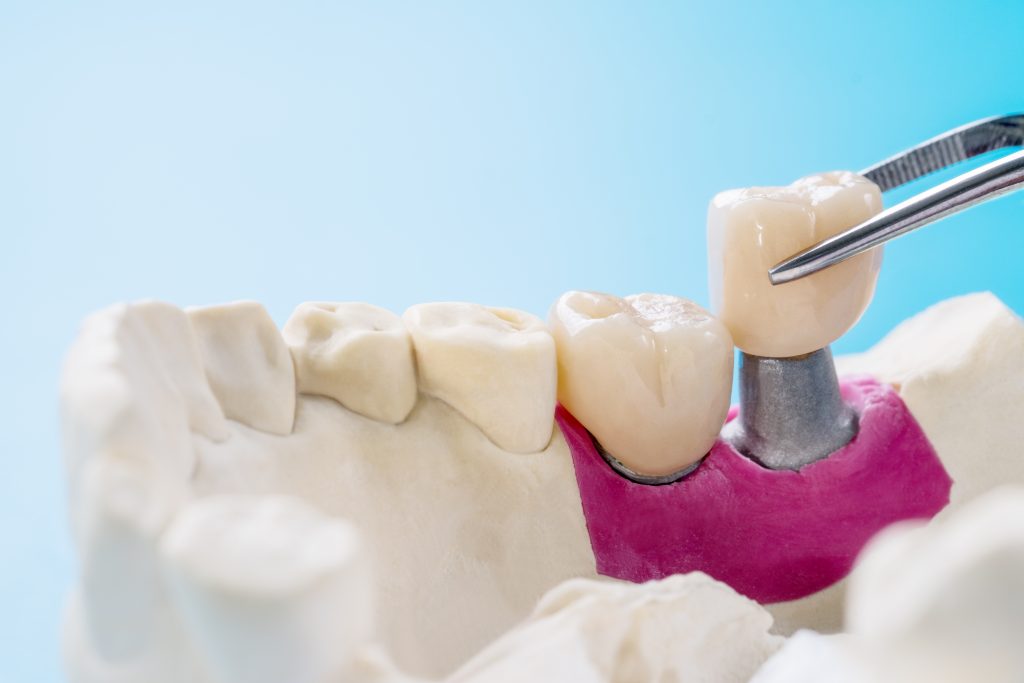
An implant has more than one part. healthdirect explains that an implant supports a crown, bridge or denture, and that treatment takes more than one appointment.
When you ask for records, these details help a new dentist understand what they are looking at:
- Which clinic placed the implant, and roughly when.
- The maker and the implant system or model, if recorded.
- Any batch or serial details, if recorded.
- Surgical notes, and notes from the later stage when the tooth was fitted.
- Who made the crown, bridge or denture on top.
- Dated images and any recent maintenance notes.
Treat this as a list of questions to ask, not a standard every Australian practice follows. A record may hold some details and not others.
The implant surgery and crown may have different record holders
Implant treatment happens in stages. One practice may have placed the implant, and another may have made the crown months or years later. Your records can therefore sit in more than one place.
| Record that may be available | Where to request it |
|---|---|
| Implant card or passport, if one was given | Your own files, or the practice that placed the implant |
| Maker, system or model, and batch or serial details, if recorded | The practice that placed the implant |
| Surgical notes and treatment dates | The practice that placed the implant |
| Details of the crown, bridge or denture | The practice that made the restoration, which may be a different one |
| Dated images | Each practice that took them |
| Recent maintenance notes | The practice that has seen you most recently |
Ask each practice only for the part it handled.
How consent and secure transfer work in Australia
The Office of the Australian Information Commissioner (OAIC) states in its guidance, Access your health information: "Australian privacy law gives you a general right to request access to the health information a health service provider holds about you."
In practice, the OAIC guidance points to these things:
- The practice may ask for a written request, identification and authorisation.
- A reasonable response time applies. The OAIC generally considers 30 days reasonable.
- Exceptions and access costs can apply. Do not assume copies cost nothing, that you will receive original files, or that a transfer will be immediate.
Ask the old practice what it needs and whether it charges. Agree a secure transfer route with the new team before anything is sent, and say which items you still lack.
What to do if you have no card or cannot find the old practice
- Check your own files. Look for invoices, treatment plans, emails, photos of any card and old images.
- Contact the original practice. Even if the dentists have changed, ask who now holds older files.
- Ask other dentists who have treated you since. They may hold notes or images from your visits.
- Tell us what you do know. An approximate year, the town or country where it was placed, and any papers still help.
A dentist can examine your mouth, look at the images available and talk through what can and cannot be worked out. We cannot promise to identify every implant or to source replacement parts for every system. Whether new images are needed is a decision for the dentist at your appointment.
Limits and risks to talk through
Records help a dentist understand your implant, but they do not predict how it will do. healthdirect lists possible risks of implant treatment, including infection, nerve damage and sinus problems. Problems with an existing implant can also have other causes, and only an examination can show what applies to you. Your dentist can talk through your options, including alternatives, once they have examined your mouth.
What Timberlands publicly offers, and what to ask us to confirm
Our implant consultation page says the dentist reviews your medical and dental history and examines your mouth. It also says the dentist discusses the risks and benefits of implants with you. Bring the records you have to that conversation. Our dental implants pages give more background on implant care at Timberlands.
Our public pages do not say whether we can identify a particular implant brand, whether we can source parts for it, whether we issue an implant card, how long a visit takes or what it costs. Please ask us about those when you book, and we will tell you what we can confirm.
healthdirect notes that medical conditions and medicines form part of the discussion about implant treatment. Bring a current list of your medicines. Do not stop or change any medicine without talking to the person who prescribes it, and ask that person any questions about a medicine before your visit.
If your implant is working well and you want day-to-day care tips, read our article on dental implant maintenance. If you have a scan coming up, see having an MRI with a dental crown.
When symptoms need a call rather than a paperwork wait
Do not hold off booking because the records have not arrived. Call us if you notice pain, swelling, bleeding, a loose crown or a feeling that something has shifted around the implant. Ask about being seen, and the records can follow. If you feel very unwell or cannot reach us, seek urgent medical help.
An optional records-request checklist
Bring this list to your appointment.
- ☐ Original clinic and treatment date, if known
- ☐ Implant identification card, if you already have one
- ☐ Manufacturer, system or model, and batch or serial details, if recorded
- ☐ Relevant surgical and restoration notes, including the later crown provider
- ☐ Dated images and any recent maintenance information
- ☐ Your permission, and an agreed secure transfer route
- ☐ A note of what remains unknown, so you can tell the team
When to contact us
Call Timberlands Dental Clinic on (08) 9306 4040. Our published hours are Monday to Friday 8:30 am to 5:00 pm and Saturday 9:00 am to 2:00 pm, and we are closed on Sunday. Please confirm your booked time directly. Use our contact page for directions.
You can say: "I already have a dental implant from another practice, and I am gathering my records. I would like to book an appointment."
Frequently asked questions
Is a dental implant passport compulsory in Australia?
Australian rules on implant cards depend on the device, so we cannot say that every dental implant must come with a passport. The TGA page on patient implant cards lists exemptions, including tooth crowns and screws. Ask the practice that placed your implant what records it holds.
Can the old practice refuse my request or charge for copies?
The OAIC says exceptions and access costs can apply, and that a reasonable response time is expected, generally 30 days. We cannot promise copies at no cost, original files or an immediate transfer. Ask the practice what it needs from you and what it charges.
Will I need new X-rays if I bring old ones?
That is a decision the dentist makes at your appointment, after talking with you and examining your mouth. Older dated images can add useful background, but we cannot say in advance whether new images will or will not be needed.
Should I stop or change a medicine before the visit?
No. Do not stop or change any medicine without talking to the doctor or other health professional who prescribes it. Bring a current list of your medicines to the visit.
What if I do not know the brand of my implant?
Tell us what you do know, such as roughly when and where it was placed, and bring any papers or images. We cannot promise to identify every implant or source parts for every system, but the dentist can examine your mouth and discuss what can be worked out.
Sources and general information note
This article is general published guidance, not personal advice. Your own dentist can assess your situation. Sources were checked on 27 October 2026:
- Access your health information, Office of the Australian Information Commissioner
- Patient implant cards and information leaflets, TGA, updated 18 August 2026
- Providing patient information leaflets and implant cards for medical devices, TGA
- Dental implant, healthdirect Australia