By Dr. Karun Krishnan, Principal dentist · · Smile Makeover
If you're comparing whitening options, the question is often whether doing it at home means settling for a different result. Dentist-supervised take-home whitening takes longer than in-chair treatment, but that alone does not mean the final result is better or worse. Healthdirect's whitening guidance makes that distinction. The choice starts with whether your teeth are suitable, then the treatment routine you can follow.
At Timberlands Dental Clinic in Wanneroo, our take-home whitening service uses custom-fitted trays and gel selected by the dentist. This article compares that approach with in-chair whitening in general; ask the team which options are currently available before planning an appointment.
What is the difference between take-home and in-chair whitening?
Both use a bleaching gel to lighten natural tooth enamel. In-chair treatment is applied by a dental professional at the clinic, often with a light. With take-home treatment, the dentist makes thin trays to fit your teeth and gives you gel and instructions to use at home.
The distinction is where the gel is applied and who manages each session. A dentist-supervised take-home kit is not the same as choosing a product from a shop or following a whitening recipe online. The Australian Dental Association recommends dental supervision when considering whitening.
Does in-chair whitening mean a whiter final shade?
A shorter treatment process does not, by itself, establish a different final shade. Healthdirect says take-home treatment takes longer to achieve results, but this does not mean its final result is better or worse than in-chair whitening. Ask your dentist what change is realistic for your teeth rather than choosing from an advertised number of shades.
The cause of discolouration matters. Stains can be on the outside of a tooth or within it. Healthdirect explains that gel applied to the outside may not whiten teeth when the cause is deep inside. A tooth that has darkened after root canal treatment needs a discussion about that particular tooth, rather than an assumption that a general whitening kit will address it.
You can bring a photo to explain the colour you have in mind. Ask, "What could this treatment change on my teeth, and what would it leave unchanged?" A photo is a way to start the conversation, not a treatment target the dentist has agreed to achieve.
What would I need to do with a take-home kit?
Your dentist explains how much gel to put in the trays, how long to wear them each day and how many weeks to use them. Follow those instructions for your prescribed kit; the Australian Dental Association describes these as parts of the individual take-home plan.
Timberlands also advises following the dentist's timing and frequency rather than wearing the trays longer to try to speed things up. Longer use can cause sensitivity. Before you start, ask what to do if you miss a session and who to contact if your trays feel uncomfortable.
If daily tray use will be difficult, say so during the consultation. You do not have to arrive having already chosen a method. Bring questions about the routine, appointments and costs so you can compare the actual plans being offered.
What needs checking before either treatment?
Arrange a dental assessment before choosing whitening. Healthdirect advises checking suitability first and does not recommend whitening when you have sensitive teeth, gum disease, cracks or holes in teeth, or untreated dental problems. Whitening is also not recommended during pregnancy or breastfeeding.
Our take-home whitening page describes checking for decay, gum inflammation, exposed roots and thin enamel before prescribing a kit. These findings can affect irritation and sensitivity. Tell the dentist if your teeth already hurt or react to cold rather than treating this as something you simply need to tolerate.
There is a difference between wanting a lighter colour and needing dental treatment. Ask whether any oral-health problem needs attention first and whether leaving the colour as it is would be reasonable for you.
What if I have crowns, veneers or white fillings?
Whitening gel does not change the colour of crowns, veneers or white fillings. Natural teeth and existing restorations can therefore look different after whitening. The Australian Dental Association advises discussing those restorations before starting treatment.
If you have visible dental work, point it out at the assessment and ask which teeth could change colour. Do not plan on whitening an existing crown. Our articles on dental crown appearance and the different types of dental veneers provide background if you are trying to identify the treatment you already have.
What side effects should I discuss?
Whitening can cause tooth sensitivity and irritation inside the mouth. Strong bleaching gel can also burn the lips, gums or tongue. The Australian Dental Association notes that sensitivity can sometimes be severe, so ask how the dentist would manage this before you start.
Do not swallow whitening gel. Healthdirect warns that swallowing it can cause nausea and stomach irritation. It also advises seeing your dental professional for a check if tooth sensitivity or mouth irritation continues for more than one or two days.
If your gums become sore while using a Timberlands take-home kit, our service page advises pausing and contacting the dentist if irritation continues or the trays feel too tight. Ask for advice before restarting or changing your treatment schedule.
How should I compare the cost and appointment plan?
Ask for the total cost before you begin. Healthdirect notes that dental treatment costs depend on several factors and recommends considering safety and how the treatment works, not price alone.
Useful questions for your quote include: Is the initial assessment included? Are the custom trays and gel included? What follow-up is planned? What would an extra visit or replacement tray cost? If you are comparing with in-chair whitening, ask for that complete plan too. These are questions to clarify your quote, not a list of inclusions promised by Timberlands.
Mention any date you are working towards, such as a wedding or a trip. Ask when an assessment could happen and what timetable the dentist recommends. Confirm availability with the practice rather than treating an online description as an appointment booking.
Do I have to whiten my teeth?
No. Whitening is an option for changing tooth colour, not an obligation. Healthdirect lists a professional dental clean as one alternative and explains that whitening toothpastes can reduce surface stains but may also cause sensitivity. Ask what is relevant to the kind of staining you have.
For a conversation about your options, contact Timberlands Dental Clinic on (08) 9306 4040. Our principal dentist is Dr. Karun Krishnan (Dentist). Tell the team you would like an assessment before deciding between whitening options.
Sources and general information
This article is general information for adults considering whitening, not an assessment of your teeth. Follow the advice of the dentist who assesses you. Information checked 8 November 2026.
Healthdirect: Teeth whitening (last reviewed February 2025); Australian Dental Association: Teeth whitening; and Timberlands: Take-home whitening kits. Sources accessed 8 November 2026. Original summaries of published facts; no source artwork or patient-education framework reproduced.
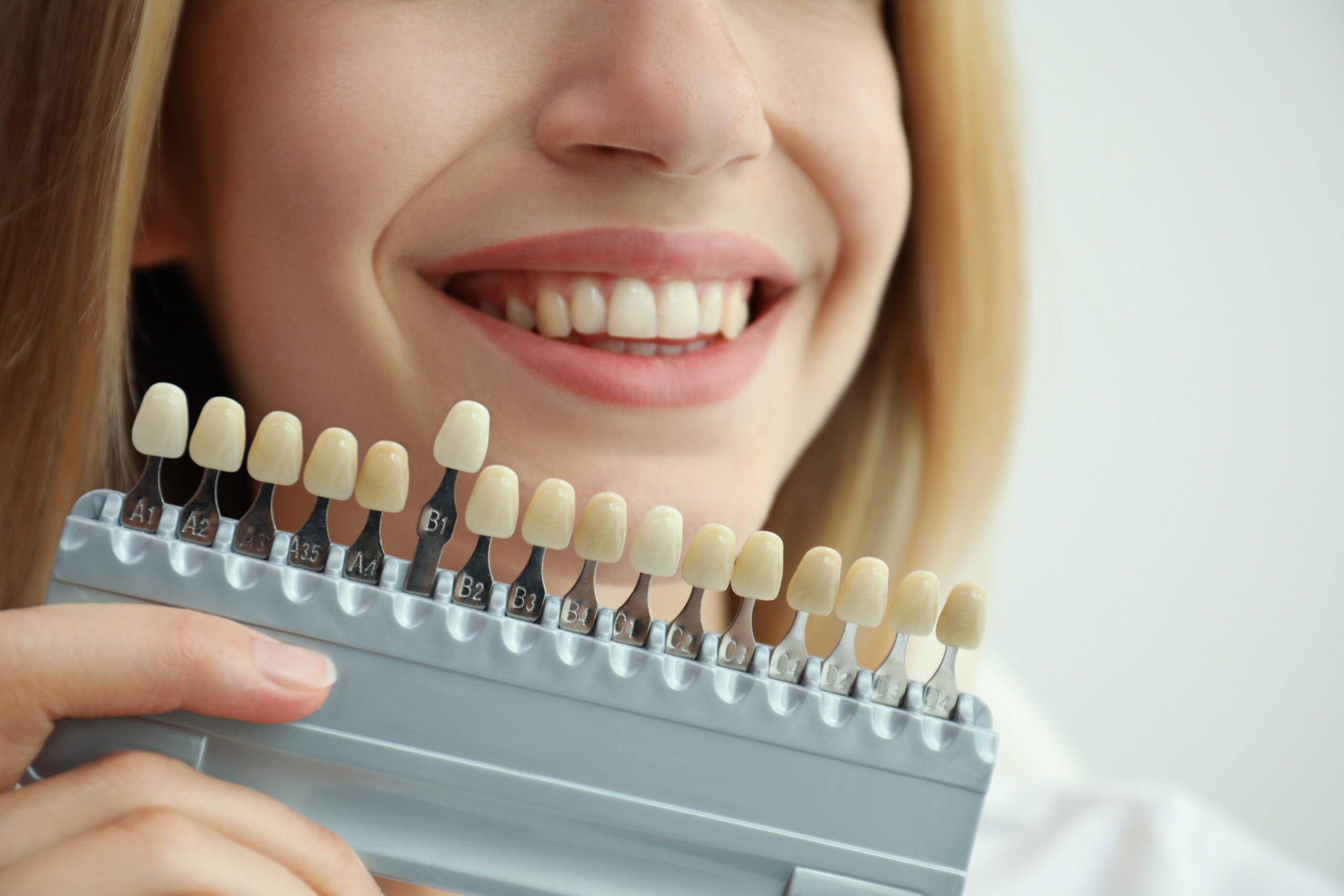
The shade-guide photograph is reused from Timberlands' existing site media. It illustrates colour assessment, not an identified patient or a treatment outcome.